

Blog
What Is Cloisonne? History, Craft, and Modern Gift Ideas

Chinese craft guide
What Is Cloisonne? History, Craft, and Modern Gift Ideas
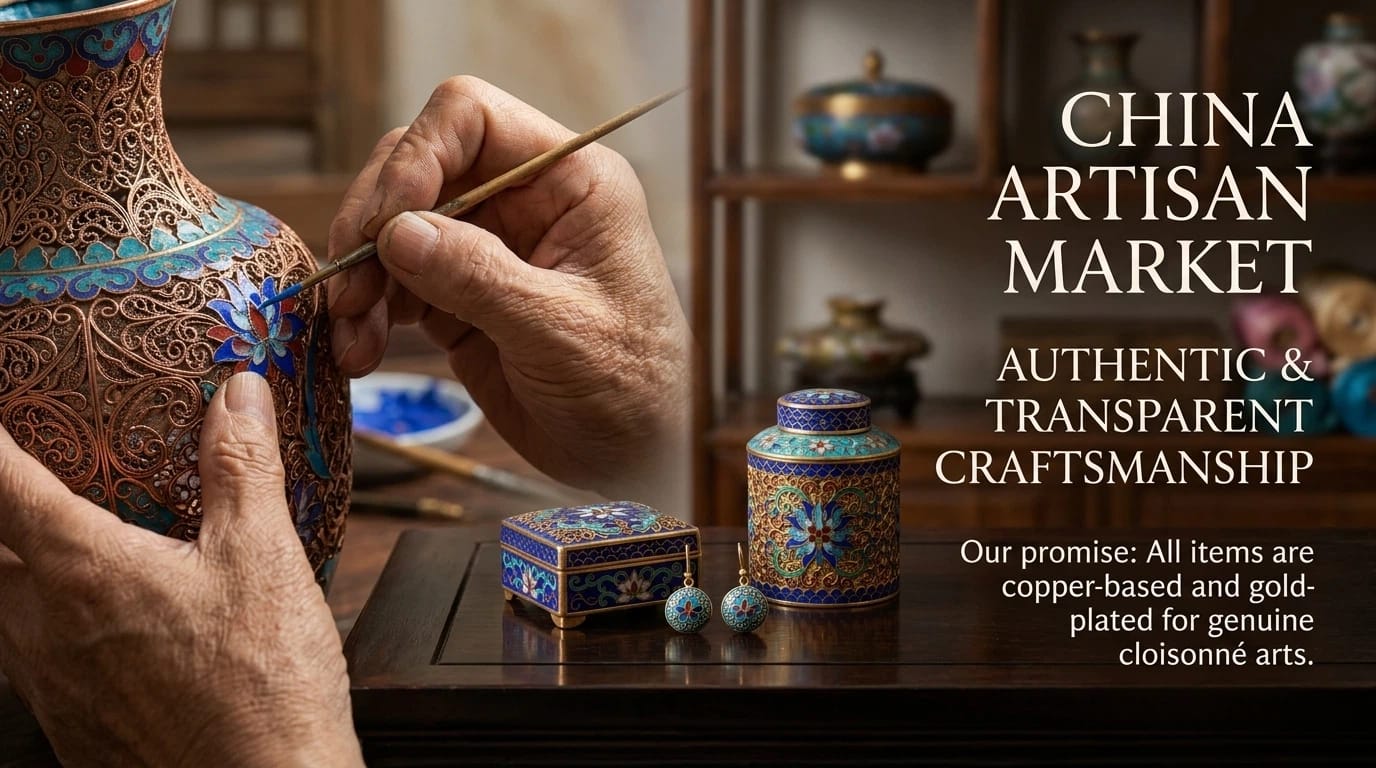
Cloisonne is a decorative enamel technique that uses fine metal wires to separate areas of color on a metal surface. The result is a vivid, jewel-like object with visible outlines, rich enamel color, and a highly polished finish.
What does cloisonne mean?
The word cloisonne comes from the French word for “partition” or “compartment.” In this technique, thin strips or wires of metal are attached to a base surface to form small enclosed spaces. These spaces are filled with enamel paste, fired, ground smooth, and polished.
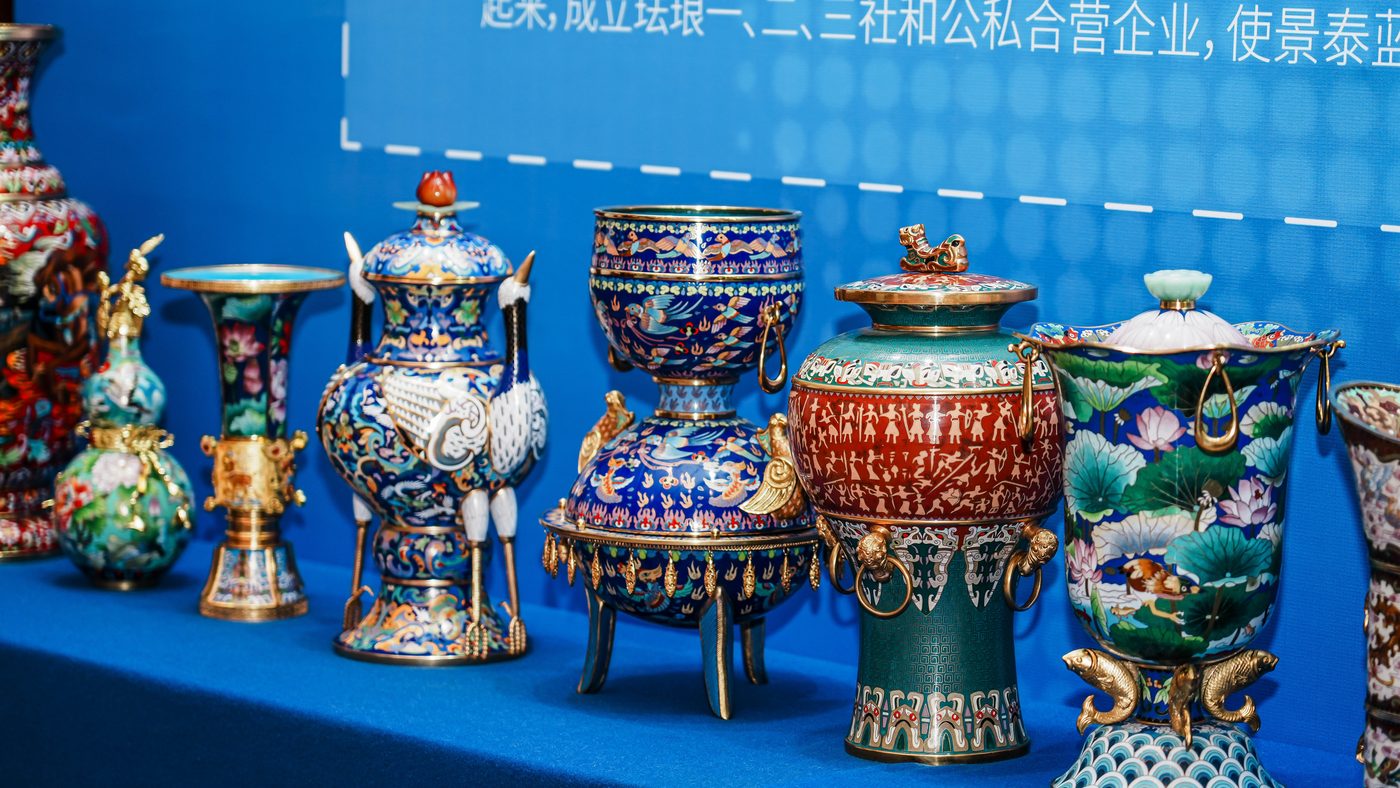
That construction is what gives cloisonne its recognizable look: color fields divided by fine metal lines. On many Chinese pieces, the outlines appear in gold or brass tones, while the enamel areas show deep blues, reds, greens, whites, and floral patterns.
How cloisonne is made
Traditional cloisonne is labor-intensive. While exact methods vary by workshop, the core process usually includes these steps:
- Creating the metal base. A vessel, ornament, or decorative object is formed from metal.
- Adding wire outlines. Fine metal wires are bent into designs and fixed onto the surface.
- Filling enamel colors. Colored enamel paste is placed inside the wire compartments.
- Firing and refilling. The enamel shrinks during firing, so the filling and firing process may be repeated.
- Polishing and finishing. The surface is smoothed until the metal outlines and enamel colors sit cleanly together.
This explains why antique and museum-quality cloisonne objects often feel architectural: the design is not only painted on top of the surface; it is built into the surface.
Cloisonne in Chinese decorative art
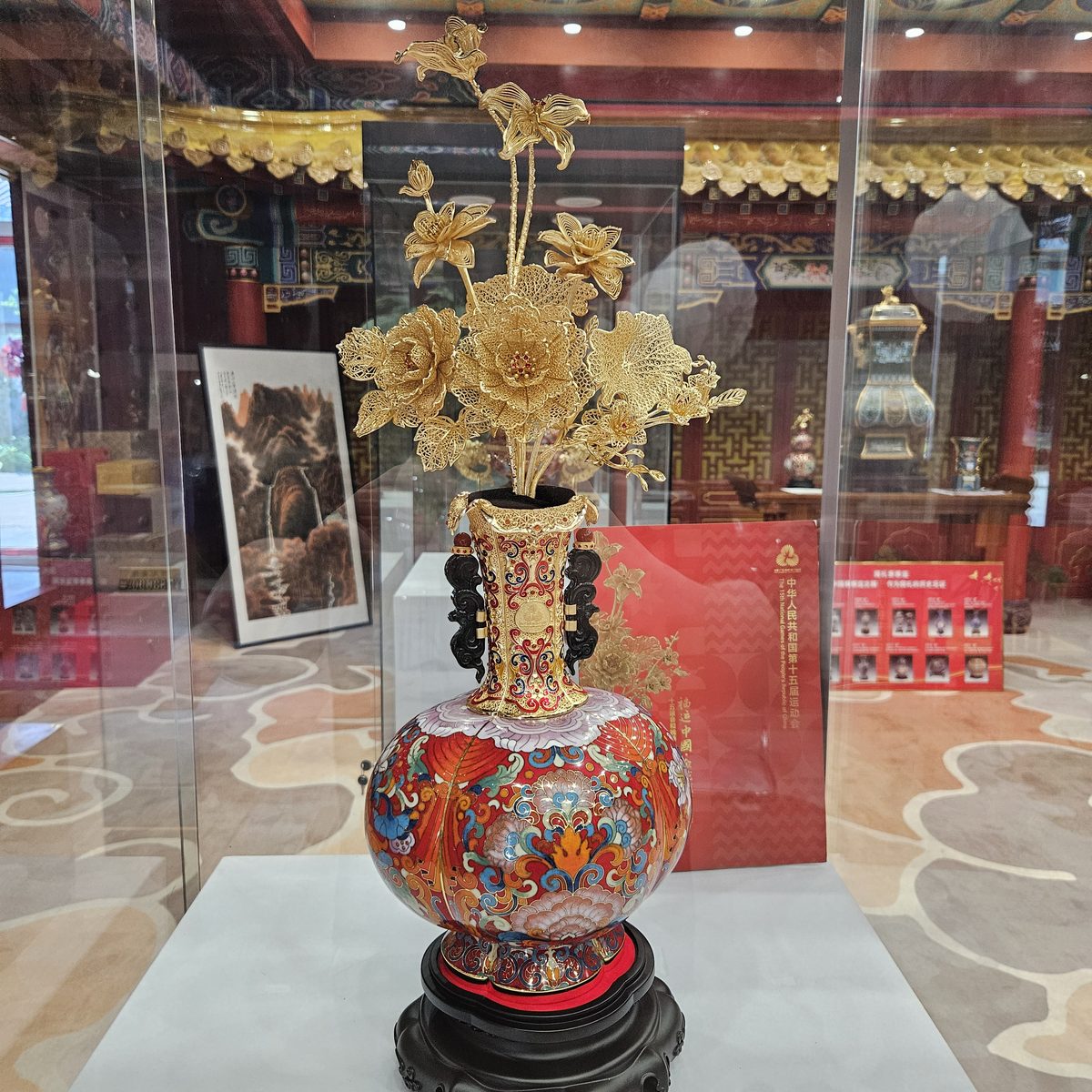
In China, cloisonne became especially associated with rich decorative objects, court taste, and temple or palace furnishings. The Metropolitan Museum of Art notes that Chinese cloisonne developed with foreign influence during the fourteenth and fifteenth centuries, with securely dated examples from the Ming Xuande reign.
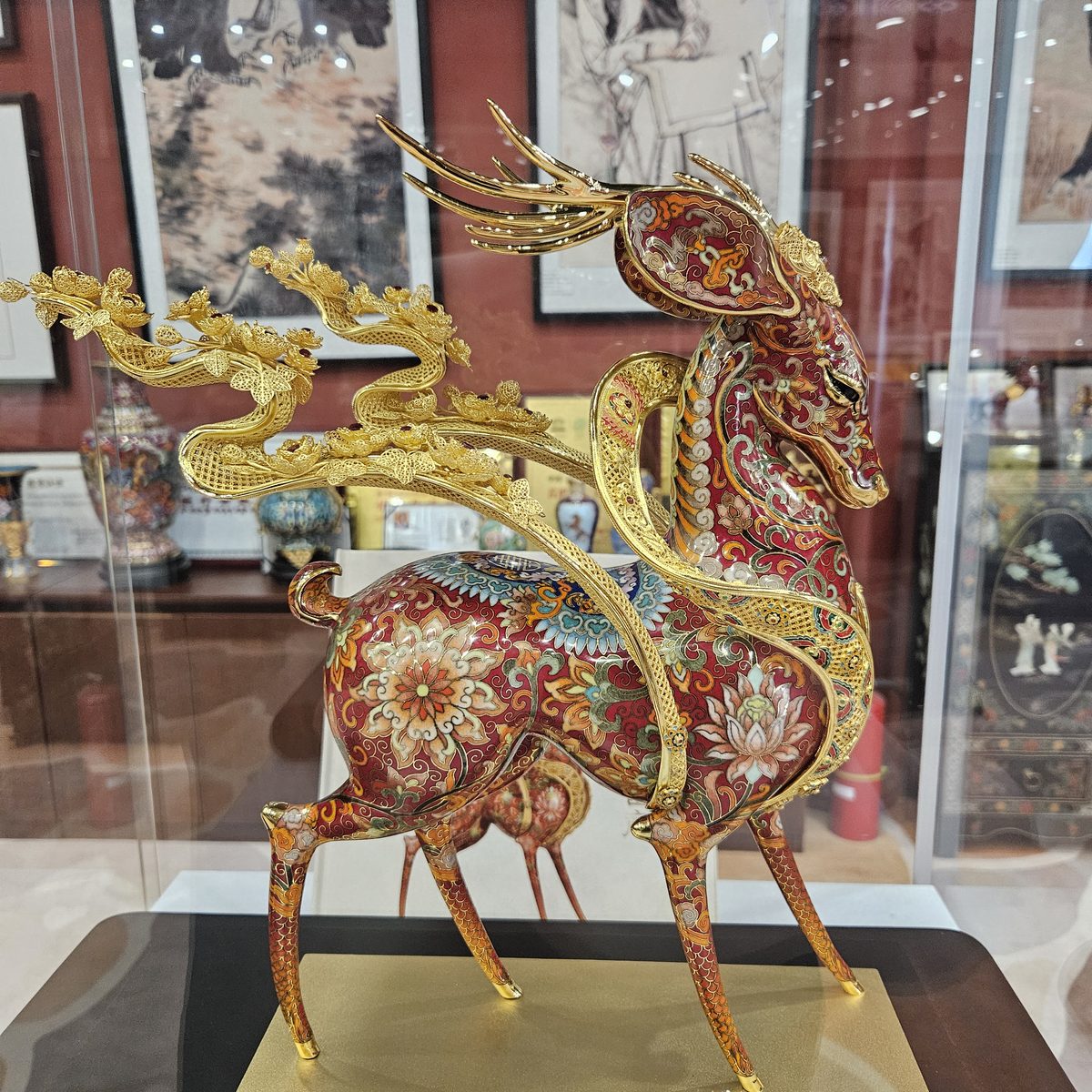
Chinese cloisonne is often connected with motifs such as lotus flowers, peonies, gourds, butterflies, cranes, deer, clouds, and auspicious scrollwork. These motifs were not just decorative. They carried ideas of harmony, renewal, longevity, prosperity, and blessing.
Cloisonne vs. cold enamel jewelry
Traditional cloisonne is a fired enamel technique on metal. Modern cold enamel jewelry is different: it usually refers to a contemporary color finish applied without the same high-temperature firing and wire-compartment process used in traditional cloisonne.
That distinction matters. A pair of modern enamel earrings may be cloisonne-inspired in color, outline, or motif, but it should not automatically be described as traditional handmade cloisonne unless the maker confirms the full process. At China Artisan Market, our jewelry descriptions use careful language such as Chinese-inspired enamel, cold enamel, and cloisonne-inspired design where appropriate.
Common motifs and meanings
Many people are drawn to cloisonne-inspired gifts because the designs feel colorful, symbolic, and personal. Here are a few common motifs:
- Lotus: purity, renewal, and graceful growth.
- Peony: beauty, celebration, and good fortune.
- Gourd: blessing, protection, and abundance.
- Butterfly: joy, transformation, and lightness.
- Deer: longevity, gentleness, and auspicious wishes.
- Clouds: harmony, movement, and celestial elegance.
How to choose cloisonne-inspired gifts
If you are choosing a gift, start with the meaning and the wearing occasion. Earrings and necklaces work well for birthdays, holidays, Mother’s Day, travel gifts, and meaningful keepsakes. Decorative vessels or sculptural pieces are better suited for collectors, home decor, or formal cultural gifts.
For an everyday gift, look for lightweight pieces with clean outlines, wearable colors, and easy styling. Blue, teal, gold, and white enamel tones pair well with linen shirts, black dresses, silk scarves, and simple evening outfits.
Explore related collections:
Care tips for enamel jewelry
Enamel jewelry should be treated gently. Avoid hard impact, perfume, cleaning chemicals, and long exposure to water. Store pieces separately so metal edges and enamel surfaces do not rub against other jewelry. Wipe with a soft dry cloth after wearing.
For shopping confidence, you can also review our Shipping Policy, Returns & Refunds, and FAQ.
FAQ
Is cloisonne the same as enamel?
No. Cloisonne is one specific enamel technique. Enamel is the broader category, while cloisonne uses metal partitions to separate enamel colors.
Is all Chinese enamel jewelry traditional cloisonne?
No. Many modern jewelry pieces are cloisonne-inspired or use cold enamel finishes. They may borrow the color language and motifs of traditional cloisonne without using the full fired cloisonne process.
Why is cloisonne often blue?
Blue became strongly associated with Chinese cloisonne because rich turquoise and deep blue enamel grounds were widely used in historical decorative objects.
Are cloisonne-inspired gifts suitable for everyday wear?
Yes, if the piece is lightweight and made for jewelry use. Earrings, pendants, and bracelets with enamel details can be worn for daily styling, holidays, and special occasions.
References










 Chinese Silk Brocade